Most of us who have a degree in English fall into raptures when we enter old universities, especially their libraries.
Our group has the good fortune of staying at Trinity College Dublin, founded in 1592 by Queen Elizabeth I. The library is another world, and visitors can’t take photographs, so I’ve downloaded this one, below, from the internet for you. The Book of Kells (c. AD 806) is housed in a special room in the library building (photo of a closeup of a page in the Book of Kells below the library photo, below).
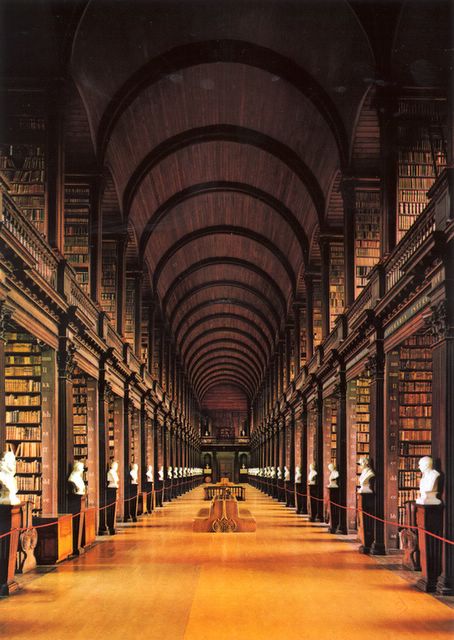
 Library at Trinity College
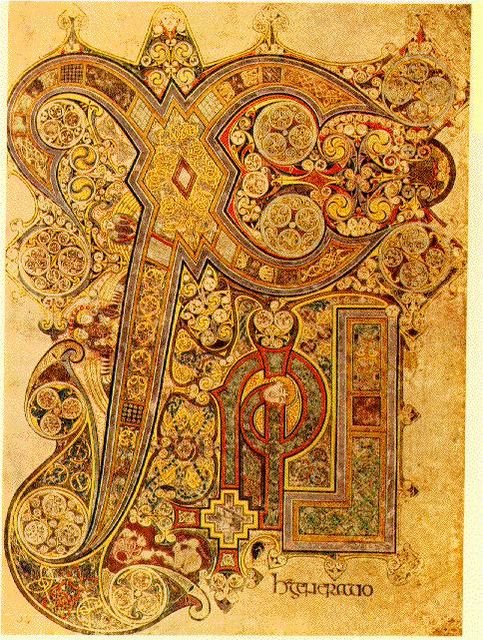 close-up of Book of Kells page Chi-Rho
In my photo of Trinity, below, you can see the building where Don and I are staying on the left. Our room looks out on tree-filled Library Square to the right. The library lies across the square from us. Hundreds if not thousands of visitors come to Trinity daily because it is such a landmark in the heart of Dublin and has a lot of historical significance. Every time I walk through the front gate to come “home” I pinch myself.
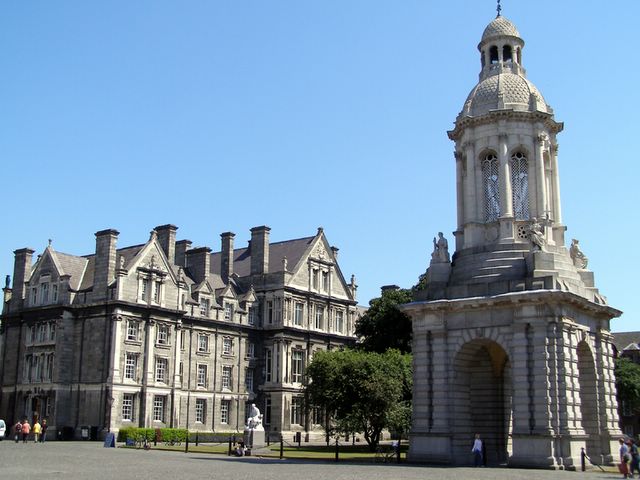
 Trinity's front gate
One of Trinity’s best known alumni is Jonathan Swift (1667-1745).
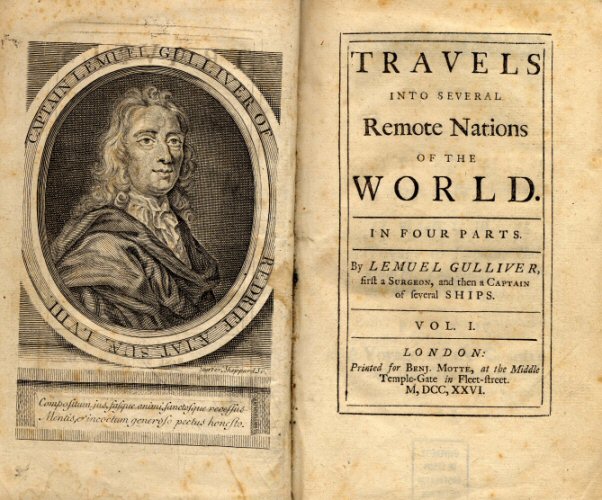
The author of Gulliver’s Travels (a bitter satire of Anglo-Irish relations) was an outspoken Irishman born in Dublin. He attended Trinity College Dublin 1682-1686 and became Dean of St. Patrick’s Cathedral in 1713. While Dean, Swift wrote Gulliver’s Travels and other scathing attacks on the British and Irish political establishment.
I did not know before reading about Swift in St. Patrick’s cathedral today the compassionate spirit he had.
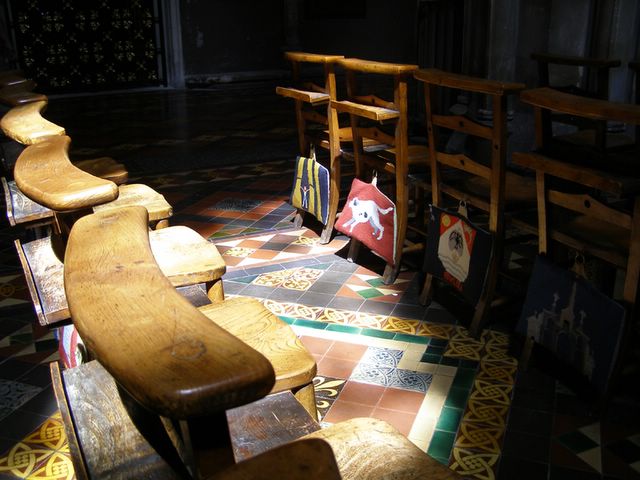 Chairs in St. Patrick's cathedral
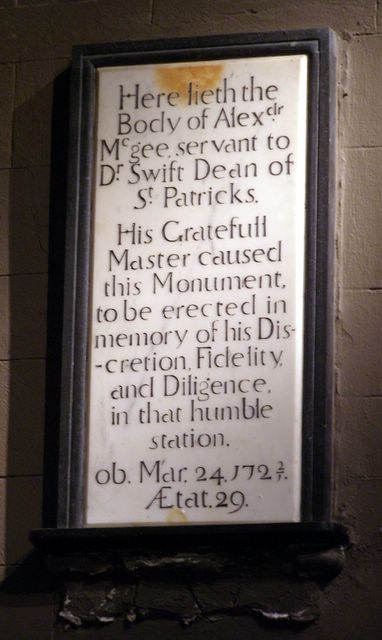
In addition to the remarkable stand he took against injustices (kept him from any higher position politically than Dean of the cathedral), he had this memorial (below) erected to his manservant, Alexander McGee, and upon his own death left money to found a hospital for mentally ill patients. Ironically, at the end of his life he suffered from Ménière’s disease, which led many to believe him insane.
By the way, Don and I saw the new film “The Wind that Shakes the Barley,” and highly recommend it. It is a gut-wrenching account of the “Black & Tans” – soldiers of the British government who were sent to stamp out the Irish fight for independence after WWI. If you’ve wondered about the beginnings of the Irish Republican Army, you’ll see it told in this lovely and sad film that won the Palme d'Or at Cannes this year.
(Another BTW, Don and I met at Trinity College in 1975. Ha, but not this Trinity College. We met at the one in Deerfield, Illinois.)



Post a Comment